Military Order Metrology & The Knights Templar
During the 12th and 13th centuries, the military orders—most notably the Knights Templar and the Knights Hospitaller—managed the economic engine of the Crusader Levant. Beyond their garrison duties, the Templars operated as international bankers, bullion dealers, and market administrators across harbor cities (Acre, Tyre, Jaffa) and interior fortresses. Standardized iron and bronze weights were essential for weighing silver dirhams, gold bezants, raw bullion, and bulk campaign rations.
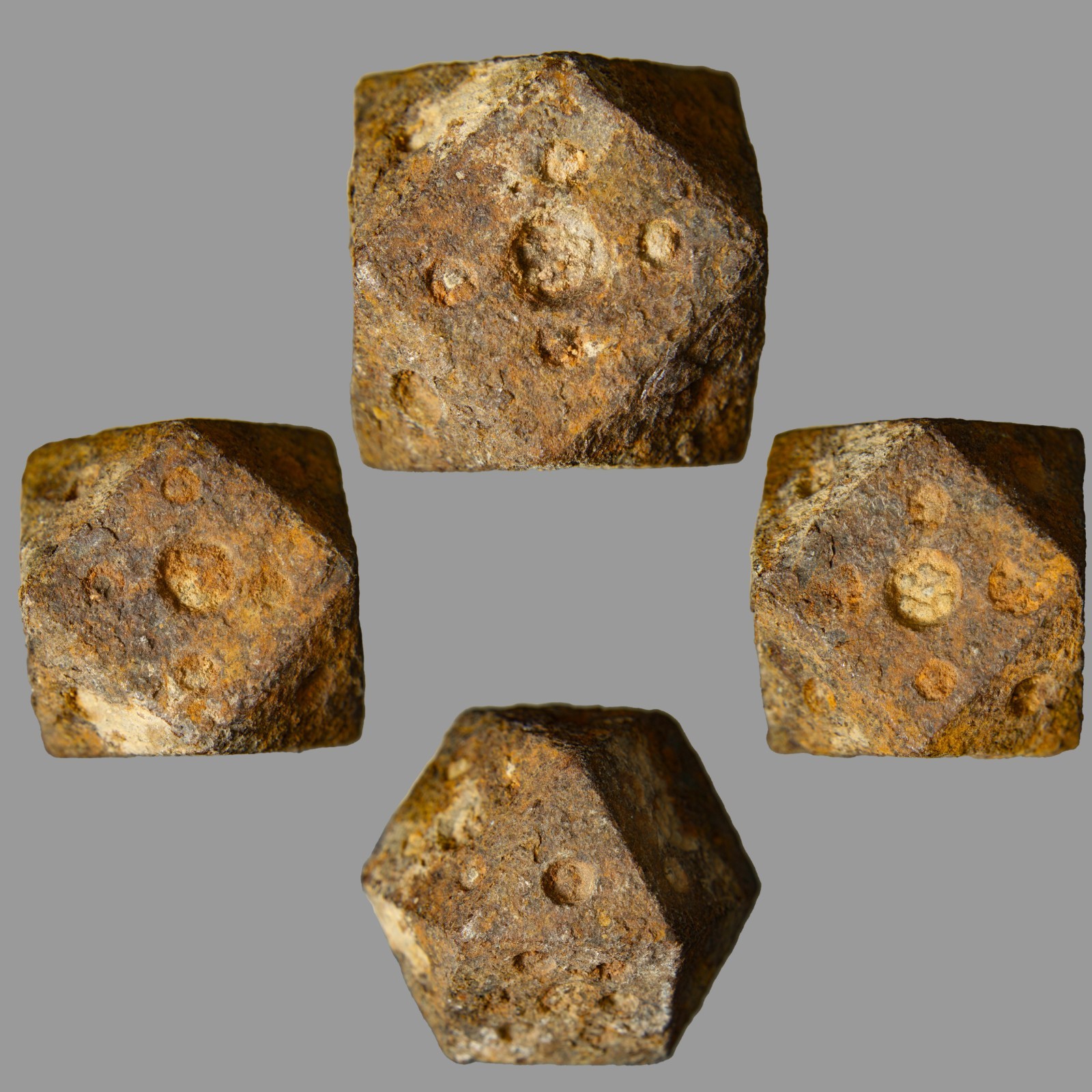
Polyhedral Geometry & The Stamped Pellet Cross (60.28g)
At 60.28 grams, this heavy cuboctahedral weight represents a double-ounce / multi-dirham standard within the Levantine trade system. Polyhedral weights were favored by medieval merchants because their truncated facets prevented illegal shaving or clipping of the metal edges. Stamping the facets with punched pellets in the form of a cross marked the weight with Christian religious authority while certifying its official mass under royal or Templar market inspection (Mathessep / Muhtasib).
Typological Analysis & Exact Classification
Comparable Archaeological Examples & Museum Accession Numbers