Thank you forlooking. Please visit my other listings of contemporary and antique Japaneseart.
Master Miyajima Muhitsu 宮島無筆 (1929-) sōsaku kokeshi “Miyabi,”signed. YamagataPrefecture, Japan.
This massive, beautifully carved figurine is the larger –and rarer – version of Muhitsu-san’s iconic Miyabi work. It is made from the precious Enju wood and measures 5.5”in height and 5.8” in diameter and weighs 2 lbs.Enju wood, derived from the Japanese Pagoda tree (Styphnolobium japonicum), isa highly durable, dense, and rare wood treasured in Japan for its symbolic, auspicious value – representing longevity, warding off evil, and bringing good luck.
Miyabi(雅) is a traditional Japanese aesthetic ideal translatingto\"elegance,\" \"refinement,\" or\"courtliness\". Originating in the Heian period (794–1185), itrepresents the elimination of crudity in favor of grace, subtle beauty, andsophistication in manners, art, and daily life. It is a core concept ofJapanese culture, often associated with a quiet, dignified, and non-flashyaesthetic. Miyabiis the appreciation of sophisticated, refinedbeauty rather than showy or extravagant displays.
This kokeshi dates back likely to the 1970s and is in excellent vintage condition. It is signedat the bottom and comes with a title plaque.
Height: 5.5” / 14.0 cm
Dimeter: 5.8” / 14.7 cm
Weight: 2.0 lbs / 907 g
Miyajima Muhitsu宮島無筆
Miyajima Shigeaki (artist name Miyajima Muhitsu) was bornin 1929. He began his journey as a traditional Yamagata-style Kijishi,apprenticing under master craftsman Kichitaro Kobayashi. Kobayashi-san, wholived nearby, offered Miyajima, a young boy at that time, to make a top (apopular wooden toy) for him in exchange for help at Kobayashi-san’s workshop.This was the event that sparked Miyajima’s interest in the craft. By 1942, Miyajima wasalready crafting kokeshi. In 1949, he established his ownstudio, shifting his focus to sōsaku Kokeshi.He adopted a pseudonym \"Muhitsu\"無筆(literally “no brush” or “without writing”) to represent his minimalist painting style.
Muhitsu’s work is celebrated for its deep reverence forwood, not just as a medium, but as a storyteller. He often uses multiple woodtypes in a single piece, enhancing texture and contrast while showcasingnatural grain. It is said that he was a master of tools and enjoyed making hisown tools for his work.
His dolls are typically stained in rich, earthy tones, withminimal paint application. Instead, he favors wood-burned outlines and subtlecolor accents, allowing the form and material to speak for themselves. Theemphasis lies in the overall silhouette, particularly the hair and bodystructure, which often evoke quiet elegance. His wife also assisted him withpainting and it is said that she was quite good at it.
Miyajima Muhitsu’s artistry has earned widespreadrecognition. He participated in numerous exhibitions and received severalprestigious awards, including the covetedPrime Minister’s Award in1973. His pieces frequently appear in publications and collector showcases,admired for their winter coats, long beautiful hair and beautifully stainedwood-grain patterns.
K1009

Related Items:
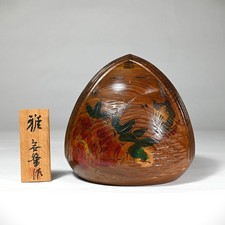
Master MIYAJIMA MUHITSU Kokeshi "MIYAGI", Signed, Japan 1970s - Large 5.5" 2 lbs
$225.00
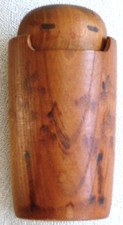
Vintage Creative Kokeshi Doll by Master Miyajima Muhitsu Φ5.7×H10.8cm "Komorebi"
$108.00
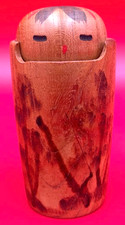
Vintage Creative Kokeshi Doll by Master Miyajima Muhitsu Φ6×H11cm "Ejiko" Japan
$118.00