A Short History of Crowley\'s Ridge
By J C. Fleming Jr.
Crowley\'s Ridge is a unique geological feature that runs roughly 200 miles from southeastern Missouri to the southeastern corner of Arkansas. Rising between 250 and 550 feet above the Mississippi Alluvial Plain and measuring 1 to 3 miles wide, the ridge looks like it was simply dropped in place. It stands in stark contrast to the flatlands on either side.
The ridge owes its existence to a combination of tectonic uplift and sediment deposition. It formed along the ancient Reelfoot Rift, a failed continental rift that now underlies the New Madrid Seismic Zone. Although the rocks deep beneath the ridge are ancient—some more than 100 million years old—the ridge as a landform is relatively young, geologically speaking.
Age and FormationCrowley\'s Ridge began taking shape in the Pliocene Epoch, about 2 to 5 million years ago. At that time, the region was dominated by high-energy river systems, particularly the ancestral Mississippi and Ohio Rivers. A natural land formation near what is now Cairo, Illinois caused the Mississippi River to flow along the west side of the developing ridge, while the Ohio River flowed to the east. These two powerful rivers pushed gravel and sediment toward the fault line, where it accumulated along the Reelfoot Rift. This convergence of fluvial activity helped form the ridge as we know it.
Eventually, the natural barrier near Cairo broke down, and the Mississippi River was captured by the Ohio River, redirecting the flow and ending the gravel deposition along the ridge. The high-standing gravel deposits remained as the surrounding delta eroded.
Later, during the Pleistocene Epoch (about 2.6 million to 10,000 years ago), winds blew in large amounts of fine silt called loess, which settled on top of the ridge.
Today, Crowley’s Ridge is composed of:
Deep Pliocene river gravels at its core (called the Upland Complex)
Eocene and older marine sediments beneath
Wind-blown Pleistocene loess forming the upper layer
Despite what some might believe, Crowley’s Ridge did not form before the dinosaurs. The dinosaurs lived during the Mesozoic Era (252 to 66 million years ago), while the ridge itself began forming much later.
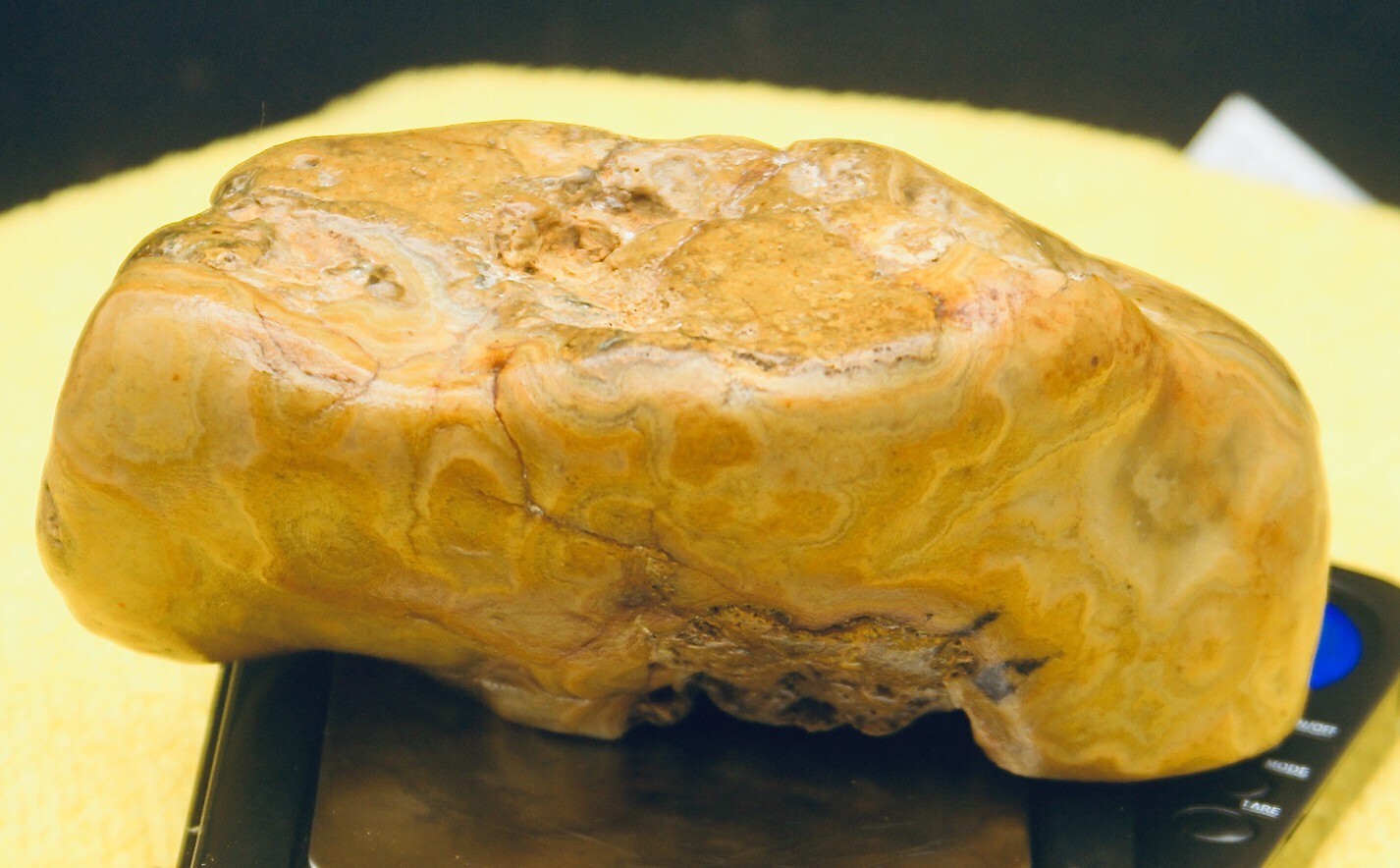
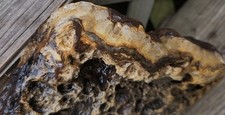
Geology and MineralsGravel pits along the ridge often expose layers of petrified wood, agates, and geodes—some reworked from older formations and transported by glacial-age rivers. These materials are typically Paleozoic in origin (roughly 250 to 540 million years old) but were deposited in the ridge much later. Agates, for example, may have formed millions of years ago in volcanic pockets and were then transported by ancient river systems into the area.
While some believe the ridge was shaped mainly by wind-blown loess, that’s only part of the story. The loess accounts for the soft, silty upper surface, but the structure itself is primarily river-built, uplifted over time due to tectonic movements along the Reelfoot Rift.
Fossils and FindingsNo dinosaur fossils have ever been found on Crowley’s Ridge, which is consistent with its younger age and its sedimentary origins. However, fossils of Pleistocene megafauna, such as mastodons, have been found in the surrounding lowlands. The gravels also yield petrified wood, likely the result of lava or mineral-rich waters preserving tree trunks over millions of years.
A Rare FormationGeologists have noted that Crowley\'s Ridge is one of very few formations like it in the world. Though comparisons are sometimes made to formations in Russia—particularly those in the Baikal Rift Zone or Putorana Plateau—none match its exact combination of features: a gravel-cored, loess-capped ridge formed along a tectonic rift in a major alluvial plain.
In conclusion, Crowley’s Ridge stands as a testament to millions of years of river dynamics, tectonic uplift, and atmospheric dust deposition. It may not be as old as dinosaurs, but its story is every bit as fascinating.
Author’s Note: I’m not a geologist, just a lifelong rockhound who fell in love with Crowley’s Ridge while hunting ducks and collecting stones. Everything in this article is based on credible research, verified geologic reports, and conversations with working geologists.
July 2020