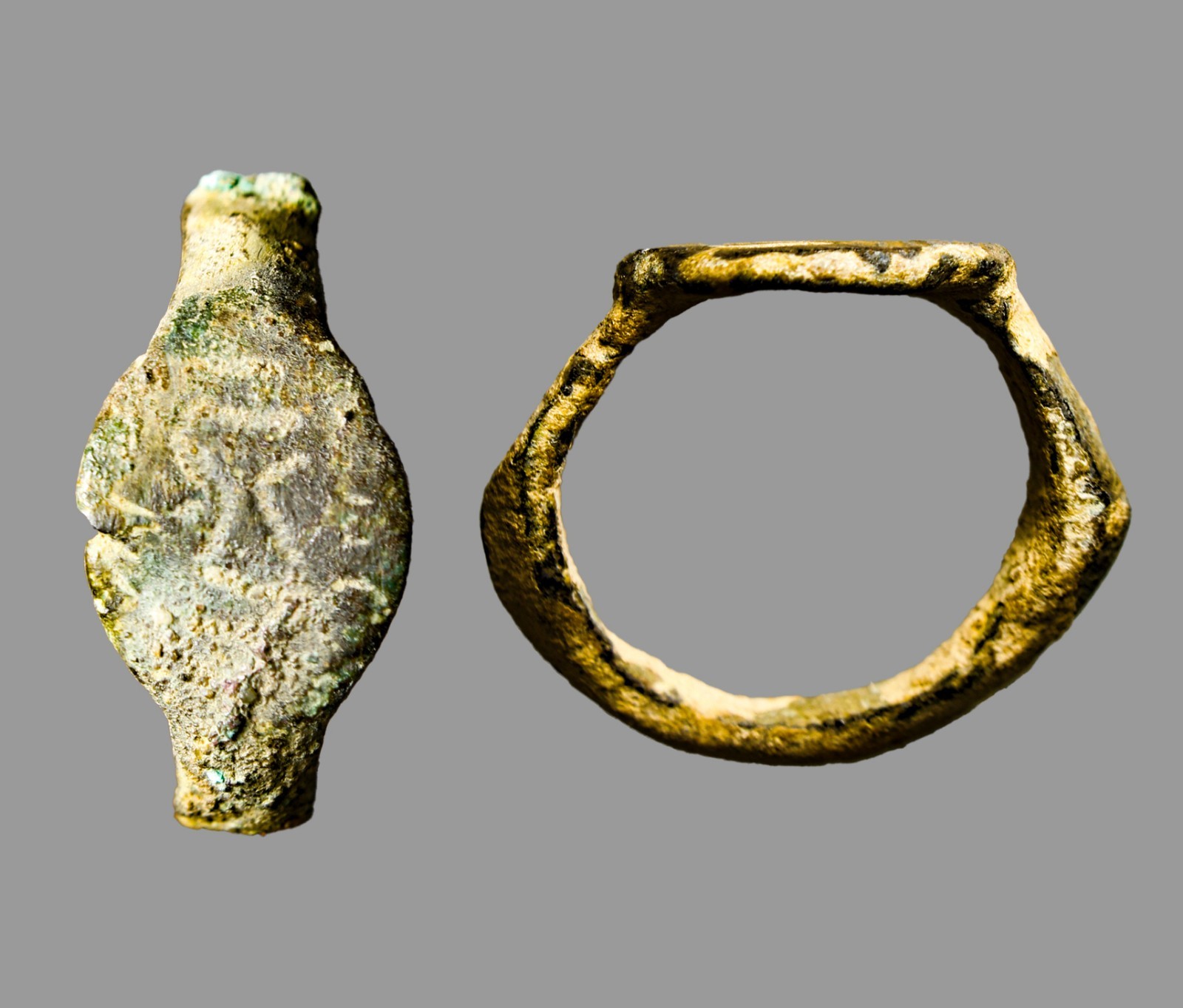
Early Medieval Viking Age Germanic Bronze Runic Amulet Ring (US Size 1 — c. 800–1100 AD)
Authenticity & Guarantee
Certification: Certified Authentic — includes signed Certificate of Authenticity (COA) with full provenance documentation.
Provenance: Ex-private European collection, legally acquired from international sales; Early Medieval Germanic / Norse Sphere.
Item Specifications & Exact Dimensions
Object: Cast Bronze Runic Amuletic Ring / Protective Pendant with Inscribed Bezel Matrix
Culture / Period: Early Medieval Germanic / Viking Age (Norse / North Sea Trade Network)
Date Range: Circa 800 AD – 1100 AD (c. 9th – 11th Century AD)
Ring Size: US Size 1 (approx. 12.4 mm internal diameter) — engineered for child wear or suspension as a protective pendant
Material: Cast Bronze (Copper Alloy)
Form & Architecture: Elongated oval/lozenge-shaped flat bezel plate mounted atop a slender circular hoop; bezel face deeply hand-chased with an incised Futhark runic stave / bind-rune character (Othala / Dagaz / Bind-Rune Matrix); flanked by distinct raised collar-knop shoulders
Condition: Exceptional, complete ancient condition. Crisp, deeply cut runic stave across the bezel face, complete original hoop with solid structural integrity, preserved under an authentic golden-olive to dark charcoal bronze patina with natural pale earthen burial encrustations in the recessed channels. Free of modern restoration or tooling.
HISTORICAL CONTEXT & TYPOLOGICAL LORE
Viking Age Runic Epigraphy & Amuletic Talismans
In the Norse and Germanic world during the early Middle Ages, runes were far more than a phonetic writing system; each stave held inherent cosmic symbolism, divine connection, and protective energy. Rings inscribed with individual runes or sacred bind-runes transformed everyday metalwork into active apotropaic charms (galdr). Staves like Othala (ancestral heritage/estate) or Dagaz (daybreak/transformation) were engraved into rings to invoke divine favor, luck, and protection against malevolent forces.
Pendant Rings & Miniature Runic Seals
Compact rings measuring US Size 1 were deliberately manufactured for young children or designed as suspension pendants worn around the neck on a leather cord or wire. This allowed the owner to keep the protective runic staves resting close to the chest while maintaining the functional geometry of a personal seal matrix. When pressed into soft wax or clay, the incised rune produced a bold, raised impression.
Typological Analysis & Exact Classification
Primary Class: Early Medieval Germanic / Viking Personal Adornment
Sub-Class: Oval Bezel Inscribed Runic Stave Ring Class
Manufacturing Technique: Lost-wax cast copper alloy with hand-chased runic intaglio graffito.
Comparable Archaeological Examples & Museum Accession Numbers
British Museum (Accession No. 1856,0701.1458): Anglo-Saxon / Viking Age bronze ring with incised runic characters.
National Museum of Denmark (Copenhagen): Viking Age bronze amulet rings bearing engraved Futhark runic staves.
State Historical Museum, Stockholm (Historiska museet): Early medieval Germanic / Norse bronze rings with protective runic symbols.
1-4

Related Items:
Ancient Viking Age Bronze Runic Letter Pendant Ring Size 1 c. 800-1100 AD COA
$165.00
Ancient Antique Pendant Viking Norse Silver engraved Amulet
$58.00
ANCIENT VIKING BRONZE ARROWHEADS LOT OF 5 SUPERB BATTLE RELICS CA 1050AD
$133.58