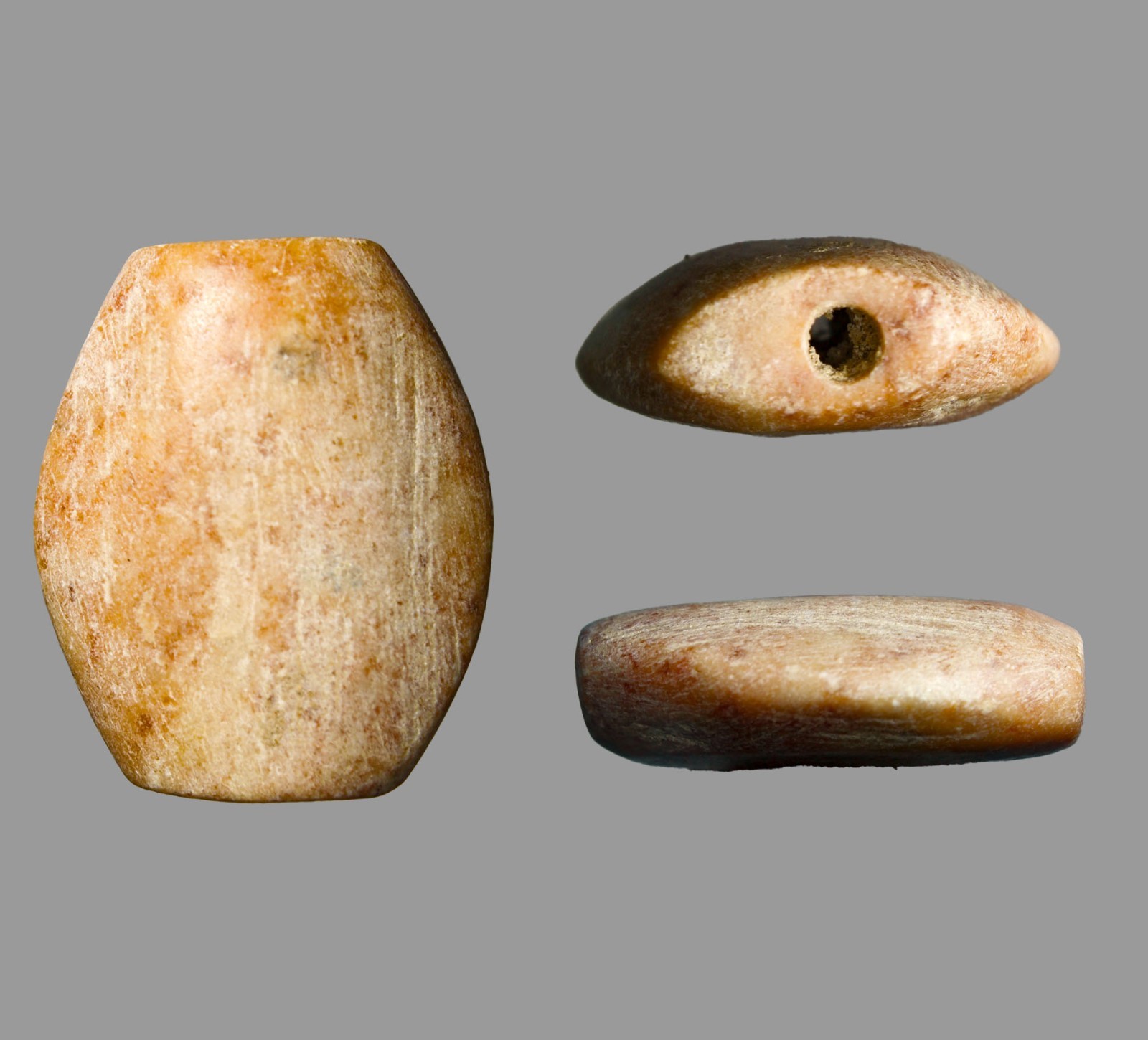
Ancient Near Eastern / Roman Period Honey Calcite (Aragonite) Barrel Bead, Circa 1st Millennium BC – 1st Millennium AD. Certified Authentic Ancient Artifact
Item: 14Culture: Roman Levant / Near EasternDate: Circa 200 BC – 400 ADMaterial: Honey Calcite / AragoniteType: Tabular Barrel BeadSize: 17.5 mmProvenance: Private collection; acquired by me in 2024
Description:
A substantial 17.5 mm ancient bead expertly carved from honey-colored calcite or aragonite. This specimen features a distinctive tabular barrel form—broad and slightly flattened—which was a preferred shape in the Roman Levant for central elements in necklaces. The stone displays a warm, earthy translucency with natural internal inclusions and subtle banding characteristic of cave-formed or spring-deposited minerals found in the Judaean and Transjordanian regions.
In the ancient world, stones of this "golden" hue were often associated with solar energy and clarity. While less durable than quartz-based stones like carnelian, calcite was prized for its ease of carving and the soft, waxy luster it developed with prolonged wear against the skin.
Authentication Notes (Ancient Surface and Tool Assessment):
Biconical Bore: The central suspension hole exhibits a clear biconical profile, evidence of being manually drilled from both ends with a bow drill. The "meeting point" ledge is visible internally, a feature absent in modern straight-bore mechanical drilling.
Surface Microwear: The stone shows age-appropriate "softening" and thousands of microscopic, multidirectional scratches. This natural patina is the result of long-term friction against clothing and other beads.
Manual Faceting: The tabular shape is slightly asymmetrical. The flat faces show subtle, irregular grinding planes that indicate the bead was hand-shaped on a stationary abrasive stone rather than being tumbled in a modern machine.
Mineral Stability: The bead shows "root marks" and minor mineral calcification within its surface pores, consistent with centuries of burial in the limestone-rich soils of the Levant.
Cultural and Artistic Context:
Tabular barrel beads were highly fashionable across the Roman East, particularly in the provinces of Syria and Palaestina. Because calcite is softer than jasper or carnelian, it was often used for larger, more imposing pieces of jewelry that would be too labor-intensive or heavy if made from harder gemstones. These "honey" stones were frequently found in funerary contexts, buried as part of the personal adornment of the provincial elite.
Museum Parallels:
Israel Museum, Jerusalem (Roman-period calcite and hardstone bead collections from the Cave of Letters).
The British Museum, BM 120563 (Near Eastern tabular beads).
Metropolitan Museum of Art, 74.51.4014 (Roman provincial jewelry).
Academic References:
Beck, H.C., Classification and Nomenclature of Beads and Pendants, p. 12–15.
Spaer, M., Ancient Glass in the Israel Museum: Beads and Other Small Objects, Section: Hardstone Typology.
Ogden, J., Jewellery of the Ancient World, Section: Soft-stone Carving in the Levant.
Condition:Very fine archaeological condition. The stone remains structurally stable. The surface retains a soft, waxy ancient polish despite minor archaeological encrustations. Guaranteed authentic.listing for 1 bead, picture shows several sides of one bead7-4

Related Items:
Ancient Near Eastern / Roman Period Honey Calcite (Aragonite) Barrel Bead 200BC
$74.37
Ancient Near Eastern Glass Eye Beads Strand Antique Terra Cotta Spindle Whorl
$197.00
Ancient Near Eastern Lapis Lazuli Bust of a Draped Figure | Rare Art Collectible
$225.00