🥊 \"Hey! How \'bout a nice Hawaiian Punch?\"
Size: 3 1/2\" ~ Sealed, never opened; some show light wear to the card edges from storage.
If you grew up with a TV in the house, you already know how this goes. Punchy pops up with his question, the poor tourist in the flowered shirt says \"Sure,\" and - wham. Decades of commercial breaks ran on that one gag and it never stopped being funny. Here\'s the little troublemaker himself, molded in plastic with his grin wide open, red cup up and thumb up, still sealed on the card Fun-4-All of New York hung him on back in the 1990s. Every one I have is still sealed, never opened and never clipped to a set of keys. 🔑
🍹 What\'s on the Card
- A molded PVC Punchy: white face outlined in blue, big open-mouthed grin, red antler-shaped hair, blue-and-white striped shirt, a red cup in one hand and a thumbs-up on the other.
- He rides a silver-tone chain with a swivel clasp, all of it under a clear plastic blister.
- Card front: the HAWAIIAN PUNCH logo on a red surfboard with a tiny Punchy in a red-and-white flowered shirt raising his cup, big KEY CHAIN lettering, \"HOW ABOUT A NICE HAWAIIAN PUNCH?\" in yellow, and a background of grapes, pineapple, a cherry and a big blue splash.
- Also on the front: FOR AGES 3 AND UP, a choking-hazard warning box, and the FUN 4 ALL logo with a TM.
- Card back: Punchy striding along with a red cup of punch and ice, the license line naming SUNDOR BRANDS INC., \"a Procter & Gamble Company,\" of Cincinnati, Ohio, the maker\'s line \"Manufactured and distributed by FUN-4-ALL Corporation, New York, NY,\" MADE IN CHINA, STYLE # 84400 and a UPC barcode.
- A round hang hole at the top, so it was made to hang on a store peg - and it will hang on a display wall just as happily.
🕰️ The Fine Print Tells You When
There\'s no date printed anywhere on the card, but the small type on the back gives it away. Procter & Gamble bought Sundor Brands, the Sunny Delight people, in 1989, then bought Hawaiian Punch in 1990, and this card\'s license comes from \"SUNDOR BRANDS INC., a Procter & Gamble Company.\" P&G sold Hawaiian Punch to Cadbury Schweppes in 1999, so a Sundor-and-P&G license on a Hawaiian Punch piece only fits 1990 to 1999. Then Fun-4-All\'s own trademark application for FUN 4 ALL - the very logo with the TM on this card - claims first use in August 1995. Lay those two windows on top of each other and this key chain comes out between 1995 and 1999. I love it when a card dates itself like that.
🌺 An Ice Cream Topping Before It Was a Drink
Hawaiian Punch didn\'t start out as something you drink. Sometime in the early-to-mid 1930s, A.W. Leo, Tom Yeats and Ralph Harrison cooked up \"Leo\'s Hawaiian Punch\" in a converted Fullerton, California garage - an ice cream topping syrup that also served as a drink base for juice stands - and they did business as Pacific Citrus Products. Five fruits went into that first recipe: orange, pineapple, passion fruit, guava and papaya, every one of them shipped in from Hawaii. It was sold wholesale only, in gallon glass jugs, to ice cream parlors and soda fountains, and customers soon worked out that it tasted pretty good mixed with water. Somewhere along the way the \"Leo\'s\" got dropped.
Leo registered the trademark on June 9, 1938, and within two years the name was worth a fight: in 1940 a Superior Court judge in Orange County told La Vida, a local mineral-springs bottler, to quit calling its drink Hawaiian Punch and to account for what it had earned doing it. Reuben P. Hughes, who had started out in the company warehouse, had climbed all the way to president and co-owner by 1946, and he renamed the outfit Pacific Hawaiian Products. Hughes got the punch base into one-quart glass containers that folks could carry home, the ready-to-drink 46-ounce cans came along in 1950, and around 1954 a second flavor, Sunshine Yellow, showed up (that\'s when the original red took the name \"Rosy\"). By 1955, the year frozen concentrate arrived, Hawaiian Punch was a national brand.
After that it went from owner to owner. R.J. Reynolds Tobacco Company bought Pacific Hawaiian in 1962-63, a deal remembered as the tobacco business\'s first step into food, and under Reynolds the punch was pitched hard at kids - toy giveaways, brighter colors, more fruity flavors. Reynolds tucked it into its Del Monte subsidiary in 1981, Procter & Gamble bought it in 1990 (that\'s the name on this card), P&G sold it to Cadbury Schweppes in 1999, Cadbury Schweppes split off its American drinks as Dr Pepper Snapple in 2008, and since the Keurig merger in 2018 it has belonged to Keurig Dr Pepper.
🌴 Fullerton and Its Garage Story
This key chain was made in China and shipped out of New York, but the brand\'s hometown is Fullerton, California, and Fullerton still tells the story with a grin. Leo\'s first plant was a converted garage on West Amerige Avenue. In the 1920s the Wickersheim Implement Company sold cars out of that very building, so the punch moved in where automobiles used to be sold. Ask around Fullerton and you\'ll hear that Fender Guitars is the most famous company the town ever turned out, with Hawaiian Punch running a close second.
And then there\'s the rival birthplace. The story goes that in 2007 a Fullerton man hung a plaque on his own garage over on Frances Avenue, calling it the spot where the formula was born in 1934 - but the Fullerton Public Library\'s history room has records putting A.W. Leo at that address only from 1936. Two garages, one punch, and I\'d happily hang a plaque on both. One more hometown footnote: in 1978 the Fullerton News-Tribune ran the headline \"Hawaiian Punch Plant Custodian Questioned About Monday Damages,\" after somebody vandalized the RJR Foods Hawaiian Punch plant on South Acacia Avenue.
👊 Punchy and His Three Origin Stories
For a fellow who only ever had one joke, Punchy has a lot of birth certificates. Hawaiian Punch\'s own history says the Atherton-Privett agency created him in December 1961, that artist Martin Mandelblatt designed him, and that he first hit television in February 1962.
The second telling runs through John Urie and Associates in Hollywood, the studio behind that first 20-second spot. Jean Guy Jacques directed it, Bob Guidi and John Urie drew up both Punchy and his victim Oaf (a few people knew the poor guy as Opie), and Rod Scribner did the animating. Scribner is my favorite part of the whole story - he was one of the old Warner Bros. cartoon animators who had worked for directors like Tex Avery and Bob Clampett, so Punchy\'s very first wallops were drawn by a Warner Bros. cartoon man. In that version, the voice asking the famous question belonged to Ross Martin, who went on to play Artemus Gordon on The Wild Wild West, and John Urie himself spoke Oaf\'s one and only word: \"Sure.\"
The third telling credits cartoonist Joe Malerba with the design, animator Jan Svochak with twenty years of Punchy\'s movement, and Len Maxwell with the voice. The old ad folks never did agree on whose story is right, and I\'d just as soon keep all three.
What nobody argues about is the gag. Oaf was dressed like a tourist in Hawaii - flowered shirt, a hat topped with a tropical flower - and he never once learned to say no, so the answer to \"Sure\" was always a punch. Steven Heller, the design writer, has written that a lot of New York kids used that very line as their license to throw a wallop of their own. The slogan was copyrighted in 1964, and industry legend has it that when the first spot ran on The Tonight Show, Jack Paar liked it so much he asked for a replay on the air; Jean Guy Jacques remembered Paar saying, \"Let\'s play that again... the second time is free.\"
By the late 1970s the brand had Donny and Marie Osmond as spokespeople and a costumed, live-action Punchy, and in 1992 Punchy even ran a tongue-in-cheek campaign for president with the slogan \"No one else has the punch.\" Some of the old write-ups call that wild antler-looking topper of his a grass hat; here it\'s molded bright red, same as the hair on the card\'s own art. That flat, classic cartoon look lasted until 2003, when a rounder 3D-animated Punchy took over - so this little guy is the original-style Punchy, not the new one.
🗽 Fun-4-All Corporation, New York
Fun-4-All Corporation was a New York outfit that took popular characters and turned them into inexpensive plush, PVC figures, dolls and key chains. That same FUN 4 ALL trademark application, the one with the August 1995 date, lists plush toys, action figures, dolls, bendable figures, board games, yo-yos, water guns, bath toys, balloons and a good deal more. The application was abandoned in 2006, and the card wears a plain TM rather than an ®. Most collectors know the name from its South Park plush, which started in 1998; Fun-4-All also carried Sonic Adventure plush from 2000, and in 2002 it made talking dolls of Ozzy and the rest of the family from MTV\'s The Osbournes. Punchy here, Style #84400, is one of their 1990s licensed pieces.
🔑 Keys or Display
Punchy was made to ride a key ring, so if you want to clip one on and let him do his job, go right ahead. If you\'d rather keep him sealed, the card is a bright little piece of tropical advertising art on its own, and it hangs nicely beside other soda and snack mascots from the same years. Either way, he\'s still grinning and still holding out that cup - just don\'t say \"Sure.\"

Related Items:
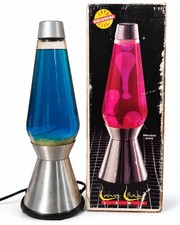
VINTAGE 1990s ORIGINAL LAVA LITE SILVER CENTURY LAVA LAMP – YELLO & BLUE - W/BOX
$199.99
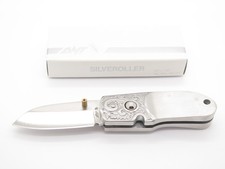
Vintage 1990s ANT 2 Silveroller G. Sakai Seki Japan 3.4" Folding Pocket Knife
$39.95
КОСФО 🇷🇺 Russia Military boots vintage 1990s Soviet style. 277C 43. US Men's10
$35.31